Commercial Waste Removal in Southwark
Commercial waste removal in Southwark needs to be straightforward, well organised and suitable for busy premises that cannot afford clutter, delays or uncertain collection arrangements. We provide a practical service for offices, shops, workshops, hospitality venues and mixed-use properties that need rubbish cleared with care and handled in a way that supports day-to-day operations. The aim is simple: remove waste efficiently, keep disruption down and leave the space ready for normal use.
Our work covers a broad range of commercial waste streams, from general office rubbish to bulky items, packaging, fixtures and mixed material that has built up over time. Where a clear route of disposal is possible, we can sort items for reuse, recycling or responsible disposal. Every job is approached as a site-specific clearance, not a one-size-fits-all pick-up, because access, waste type and the nature of the premises all matter.
If you are planning a clear-out, start with the type of waste and the access available; that gives a much cleaner basis for a quotation. You can also request a quotation once you know whether the job involves routine commercial waste, heavy objects or a fuller premises clearance.
Everyday business waste collections
Routine commercial waste removal is often about keeping on top of the small but constant build-up that affects back rooms, storage areas and work floors. That may include mixed rubbish, broken office furniture, cardboard, bagged waste, obsolete stock or light fittings and fixtures that are no longer needed. We organise removal so that the load is dealt with in a controlled way, rather than left waiting in a corridor or service yard.
For many businesses, the most useful arrangement is a clear removal plan that matches the volume and type of waste being produced. This can be especially helpful where items come from several parts of the building at once, such as reception, storage, staff areas and shared corridors. If you are comparing options, business waste removal is the best fit for ongoing commercial clearances, while a wider waste removal service suits mixed loads that do not sit neatly in one category.
The practical aim is to avoid waste becoming a secondary problem. Good removal work reduces trip hazards, improves access to storage or work areas and helps the premises stay presentable for staff and visitors. It also makes it easier to separate items that need special handling from ordinary rubbish, which is important when a commercial load contains a mixture of materials. Clear sorting at the outset saves time later and gives the job a cleaner finish.
Office, shop and premises clearances
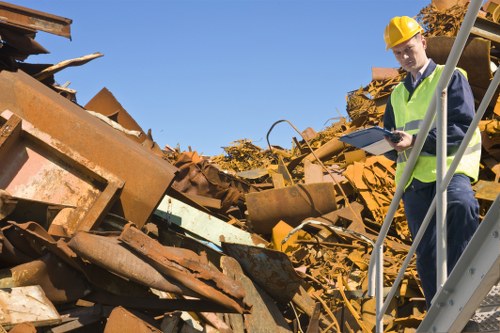
Commercial premises often need more than a simple collection. Office and shop clearances can involve desks, shelving, filing units, chairs, IT-related items, display fittings, packaging and general waste built up through refits, relocations or changes in trading layout. We remove items carefully so that floors, lifts and shared entrances are left as accessible as possible during the process.
If you need a more structured clear-out, office clearance is suited to desks, chairs, storage furniture and day-to-day office contents, while flat clearance or home clearance may be relevant where a mixed-use property includes domestic-style items alongside business waste. Choosing the right page helps clarify what is being removed and what sort of access may be needed for the job.
A careful premises clearance should also respect any items that need to remain in place. That can include leased equipment, archived records, stock for sale or furnishings that are staying put during a phased move. We can work around those boundaries where they are made clear in advance. Useful instructions are usually simple: what stays, what goes and where access begins and ends.
What is useful to specify before collection
To prepare a quotation and make collection day smoother, it helps to know the approximate volume of waste, where it is located and whether anything is awkward to move. A short description is often enough, but photographs can be useful when items are bulky, stacked tightly or spread across several rooms. If there are loading restrictions, upper floors or shared entrances, mention those details as well so the job can be planned sensibly.
It is also helpful to say whether the waste is loose, bagged, boxed or still assembled as furniture or fittings. That makes it easier to judge handling and loading needs. For businesses arranging a one-off clearance after refurbishment or downsizing, these points can have a noticeable effect on the most suitable way to organise the work. You do not need a long explanation; clear and practical detail is better than a large amount of guesswork.
If you are ready to move on, request a quotation and share the basic scope of the job. pricing and quotes may also be useful if you want to understand how larger or more involved removals are typically assessed before confirming the work.
Bulky items, fixtures and specialist disposal

Commercial rubbish is not always limited to bagged waste. Offices, retail units and storage areas often contain bulky items such as cabinets, counters, shelving, sofas, fridges, mattresses or mixed furniture that must be moved carefully and disposed of properly. These jobs usually require more handling than a simple collection, especially where items are heavy, awkward or tightly fitted into the building.
Where bulky items are the main issue, furniture clearance can be useful for desks, chairs and larger office pieces, while furniture disposal suits items that are at the end of their usable life. For white goods or built-in appliances, fridge and appliance removal gives a more specific route, and mattress and sofa disposal is relevant when those larger soft items are the main load.
Specialist disposal matters because not every bulky item is handled in the same way. Some loads are straightforward, while others need attention because of materials, weight or how the item has been installed. We deal with that mix by matching the removal method to the item rather than forcing everything into one approach. That makes the clearance safer and more orderly, particularly in commercial premises with narrow access or shared circulation space.
Refurbishment, builders and post-work clear-ups
Refurbishment work often leaves a different kind of waste from ordinary business rubbish. Packaging, offcuts, broken fittings, old fixtures and mixed debris can build up quickly and make it hard to reopen or continue trading comfortably. Commercial waste removal in this context is about restoring usable space after work has finished, while making sure the waste is sorted and removed with proper attention to the type of material involved.
If your job follows maintenance or fit-out work, builders waste clearance is the most direct option for rubble, offcuts and renovation leftovers. For spaces that also contain obsolete office or retail furniture, that service can be combined in practical terms with other clearance categories, depending on what is actually on site. garage clearance may also be relevant where stock, tools or stored materials have been left in a back area or outbuilding used by the business.
One useful decision is whether the job is primarily a clearance or a mixed removal with several waste types. That distinction matters because it affects loading, sorting and the order in which items are taken away. A clear inventory is not always necessary, but a sensible summary of what is present helps avoid delays and makes the quotation more accurate.
Waste handling, sorting and responsible disposal

Responsible commercial waste removal is about more than simply taking items away. A well-run collection should separate reusable, recyclable and residual waste where practical, and it should handle any restricted items in line with the correct disposal route. That is especially relevant when a load contains different materials from offices, stockrooms, kitchens or shared storage areas all in one place.
Where businesses want to understand what happens after collection, recycling and sustainability explains the broader approach to sorting and diversion from landfill, while hazardous waste disposal is relevant only if the job contains items that need more careful handling than ordinary commercial rubbish. We do not assume every clear-out includes those materials; they should be identified separately when they are present.
Good disposal practice begins with classification. A mixed commercial load may include recyclable cardboard, broken furniture, obsolete equipment and general waste, each needing its own route. When those categories are separated properly, the clearance is more efficient and the outcome is easier to manage. It also helps businesses keep better control over what is leaving the premises, especially where stock, fixtures or equipment have different disposal requirements.
Booking, access and quotation details
Commercial waste removal works best when the practical details are clear before collection day. That usually includes the site type, the number of floors involved, whether lifts or loading bays are available and whether items are located in one room or across several parts of the premises. If there are time restrictions, shared entrances or security procedures, those are worth mentioning early because they can affect how the work is organised.
When a business is gathering information for a quotation, keep the description focused on the waste itself and the access conditions. A few photographs can help if the load is bulky or the route out of the building is awkward. If you are ready to compare options, book online may suit a simple enquiry, and contact us is the most direct way to ask for a quotation on a commercial clearance or mixed waste removal job.
For more detail on how charges are approached, pricing and quotes remains useful, but a quotation can only be meaningful when the load, access and service type are clear. That is why a short, accurate description matters more than a long one.
About Southwark
Southwark sits on the south bank of the River Thames and is one of London’s most historically layered districts, with a street pattern that reflects medieval routes, riverside trade, Victorian rebuilding and later regeneration. The area is associated with landmarks such as Borough Market, Southwark Cathedral, the Tate Modern nearby on the riverfront edge of Bankside, and the Shard at London Bridge, while also containing quieter residential streets, estates and civic buildings away from the busiest visitor routes. Its position opposite the City has long made it a place of crossings, commerce and movement, and the riverside continues to shape the character of the district through walks, views and transport links. Southwark also includes parts of Bermondsey, Walworth and Peckham within the wider borough, so the name can refer to both a specific historic locality and the larger administrative area. The district’s built environment is varied: old churchyards sit near modern towers, railway infrastructure runs alongside cultural venues, and surviving fragments of older London sit within an intensely urban setting. Parks such as Potters Fields and the open spaces around the riverfront provide contrast to the dense streets, while institutions including theatres, galleries and markets contribute to a busy public life. The combination of heritage, redevelopment and day-to-day local activity gives Southwark a character that is both longstanding and constantly changing, with the Thames remaining a defining feature throughout.
Additional clearances for mixed commercial sites
Some premises need several related services rather than one narrow type of collection. A storage room may contain old office furniture, a broken appliance, cardboard, garden-type waste from an outside area and general rubbish all at once. In those cases, it is often better to describe the site as a mixed clearance so the work can be planned around the actual contents, rather than trying to squeeze everything into one label. That approach keeps the process more accurate and avoids confusion about what is included.
Where different spaces are involved, the most suitable page may depend on the part of the site that needs attention. loft clearance can apply where items are stored above a commercial unit, garden clearance may suit outside areas linked to a business premises, and house clearance can be relevant if a commercial property includes domestic accommodation or a mixed-use floor. Each page provides a clearer starting point for the type of contents involved.
The main decision is whether the job is best treated as one broad removal or as several linked clearances. Either way, the aim is to remove unwanted material safely and efficiently without overcomplicating the process. If you have a combination of items and are unsure which service page fits best, send a short description of the site and the waste, then ask for a quotation based on that mix.