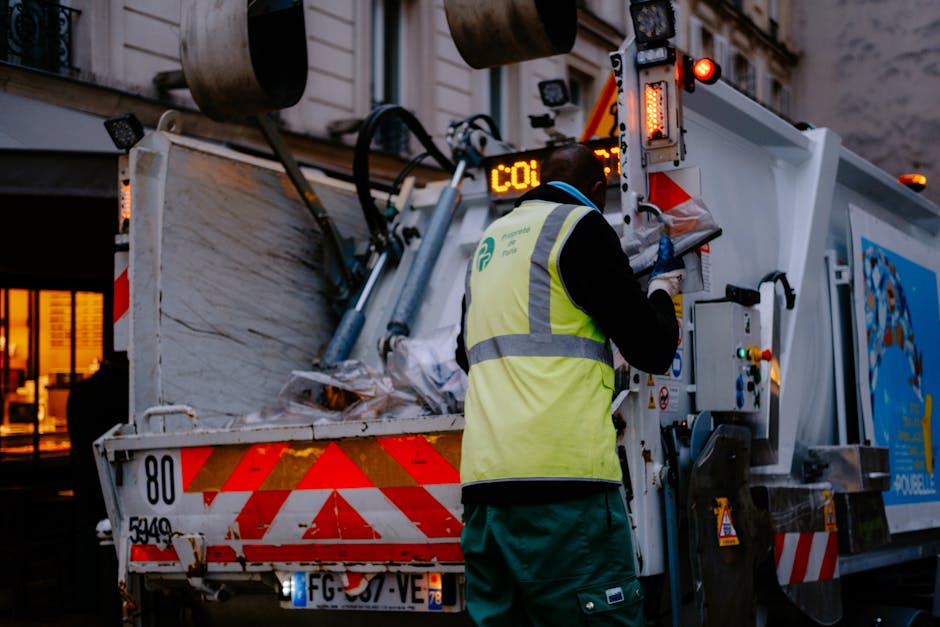
Bermondsey Street Waste Removal Services SE16: A Practical Guide for Homes, Flats, and Local Businesses
If you live, work, or manage a property near Bermondsey Street, you already know waste can pile up quickly. A refit leaves plasterboard and timber in the hallway. A flat clearance reveals far more than expected. An office tidy-up turns into an awkward mountain of chairs, boxes, and broken fittings. Bermondsey Street waste removal services SE16 are there to make that mess manageable, and to do it in a way that feels calm, tidy, and properly handled.
This guide explains how waste removal works in the area, what it is best used for, where the common problems are, and how to choose the right approach without wasting time. You will also find a simple checklist, a comparison table, and practical tips that make the whole thing a lot less stressful. Truth be told, that is usually what people want most: not drama, just the place cleared properly.
Why Bermondsey Street waste removal services SE16 Matters
Bermondsey Street sits in a part of London where space is often tight, access can be awkward, and timing matters more than people expect. Waste that would be mildly inconvenient in a suburban driveway can become a real nuisance outside a terrace, a converted flat, or a small business unit. Bags in a corridor. Old furniture blocking a stairwell. Renovation waste left waiting for the next tidy-up. It only takes one busy morning for a small pile to become a proper problem.
That is why a responsive waste removal service matters here. It is not only about taking things away. It is about keeping your property usable, avoiding unnecessary disruption, and dealing with materials in a way that is sensible for the setting. Bermondsey Street waste removal services SE16 are especially useful where you need a fast turnaround, limited lifting, and a clearer path from "this has to go" to "sorted."
In a busy London street, waste can also affect neighbours, staff, customers, and even building access. Nobody wants a sofa balanced at the front door for two days. Let's face it, that never looks good and rarely feels great either.
How Bermondsey Street waste removal services SE16 Works
In most cases, the process is straightforward. You describe what needs removing, the team assesses the load, agrees the price or quote method, and arranges a time to collect. Some jobs are quick single-load clearances. Others need a bit more planning, especially if the waste is bulky, mixed, or in a property with stairs, restricted parking, or no lift.
For many customers, the real benefit is the convenience. Rather than hiring a skip and figuring out permits, loading time, and pavement placement, a clearance team comes to the property, removes the waste, and takes care of disposal. That makes a lot of sense for Bermondsey Street properties where access can be a bit fiddly and road space is limited.
Good providers will also separate reusable, recyclable, and non-recyclable material where possible. If you want to understand the broader service offer, it can help to look at the main waste removal service and the company's recycling and sustainability approach. That gives you a clearer sense of how the work is handled after collection, not just during pickup.
A typical job might look like this:
- You send a description or book online.
- The team confirms what can be taken and whether any special items need separate handling.
- A collection slot is arranged.
- The team arrives, assesses access, and removes the items.
- The waste is sorted, loaded, and taken away for proper disposal or recycling.
Simple on paper. In real life, though, good coordination makes all the difference. A ten-minute delay is nothing if it saves an hour of confusion later.
Key Benefits and Practical Advantages
The main reason people use Bermondsey Street waste removal services SE16 is speed, but that is only part of the story. The real value shows up in the details.
- Less disruption: Items are removed quickly, which keeps hallways, entrances, and work areas usable.
- No heavy lifting for you: Bulky furniture, appliances, and mixed waste are handled by people used to awkward loads.
- Better for tight spaces: Flat blocks, upper floors, and narrow access points are common around Bermondsey Street.
- More flexible than a skip: Useful when you do not want waste sitting outside for days.
- Cleaner finish: A proper clearance leaves the site ready for the next step, whether that is decorating, moving, or reopening a room.
- Useful for mixed loads: Furniture, office waste, building debris, and general clutter can often be cleared in one visit, subject to what is allowed.
There is also a quiet but important benefit: peace of mind. If you have ever tried to coordinate disposal yourself, you will know how quickly it can turn into a chain of small jobs. Find a van. Lift the sofa. Check what can be dumped. Queue at the tip. Hope nothing gets rejected. It is a lot, especially when you already have five other things going on.
For larger or more specific jobs, related services such as office clearance, house clearance, and builders waste clearance can be more suitable than a general pickup. Matching the method to the job usually saves time and money.
Who This Is For and When It Makes Sense
These services are not just for big refurbishments. In fact, many of the most common jobs are pretty ordinary: a few old wardrobes, broken appliances, shop packaging, storage room clutter, or the aftermath of a move.
Bermondsey Street waste removal services SE16 make sense for:
- Flat owners and tenants who need to clear bulky items without hiring a vehicle.
- Landlords and managing agents dealing with end-of-tenancy clutter or abandoned belongings.
- Local businesses disposing of office furniture, packaging waste, or redundant fixtures.
- Tradespeople looking to clear renovation debris after a project.
- Homeowners who are decluttering lofts, garages, or spare rooms.
- People handling bereavement or probate clearances who need a respectful, structured process.
A small but useful example: if you are clearing a one-bedroom flat and need to get rid of a bed, a mattress, and a few bags, a removal service is often quicker than trying to piece together transport yourself. If, on the other hand, you are stripping out several rooms, you may want a more tailored home clearance or flat clearance solution.
It is not always obvious at the start which route is best. That is normal. Most people only figure it out once they have looked at the pile properly and thought, "Right... that is more than I expected."
Step-by-Step Guidance
If you want the smoothest possible experience, a little preparation helps. Nothing over the top. Just enough to keep things moving.
- Sort the waste into rough groups. Separate furniture, general rubbish, electrical items, and anything potentially hazardous.
- Measure bulky pieces. A wardrobe that looked easy to move in the room may be awkward on the stairwell. Funny how that happens.
- Check access. Note parking restrictions, narrow entrances, lift availability, and any time limits.
- List special items. Fridges, mattresses, sofas, and certain appliances may need specific handling.
- Ask about what is excluded. Hazardous materials are not handled the same way as everyday junk.
- Confirm the collection process. Ask whether the team needs you present, how long the job may take, and what payment methods are accepted.
- Keep pathways clear. If the team can reach the items easily, the job tends to go much faster.
If you are arranging a one-off collection, booking online is often the easiest route. For smaller loads, it may be worth checking pricing and quotes first so you know what to expect before anyone arrives. That kind of clarity helps everyone.
And if the work involves building debris, mixed rubble, or post-project materials, read up on what can go in a skip even if you are not actually hiring a skip. It is a useful way to understand what is usually accepted, what needs caution, and what probably needs separate treatment.
Expert Tips for Better Results
From a practical point of view, the best waste jobs are the ones where the customer gives a little detail up front. Not a novel. Just enough to avoid surprises.
1. Be specific about item types. "Mixed rubbish" is fine as a broad label, but "2 wardrobes, a mattress, three black bags, and some cardboard" is much easier to plan around.
2. Mention access issues early. If there is no lift, a steep staircase, or a parking bay that disappears by lunchtime, say so. The team can plan accordingly.
3. Keep valuables and documents separate. It sounds obvious, but it happens. A single envelope in a cluttered drawer can vanish into a clearance pile quicker than you think.
4. Think about timing. Early slots can work well in quieter streets, while later bookings may suit business premises that need to keep mornings free.
5. Use the right specialist service. A fridge is not the same as a wardrobe. A commercial office clear-out is not the same as a few bags from the loft.
If you are unsure, ask before collection. The best providers would rather answer a simple question than untangle a misunderstood job later.
6. Choose environmental handling carefully. If sustainability matters to you, ask how reusable items and recyclables are separated. It does not need to be complicated, just transparent.
Expert summary: The easiest waste removal jobs are the ones with clear item lists, honest access details, and the right service matched to the waste stream. Small prep, big difference.
Common Mistakes to Avoid
People usually make the same handful of mistakes, and nearly all of them are avoidable.
- Underestimating volume: A few bags and one sofa often turn into a full van load once everything is gathered.
- Leaving sorting until the last minute: This can slow collection and cause confusion over what is included.
- Forgetting access constraints: Bermondsey Street properties often have tighter access than people first assume.
- Assuming everything can be taken together: Some items need separate handling, especially hazardous or specialist waste.
- Not checking insurance and safety: This matters more than many customers realise, particularly in communal areas and shared buildings.
- Choosing the wrong disposal method: A skip may suit one job, but a direct collection may be far better for another.
One common slip-up is booking the service too late in the project. By the time the clutter is blocking the hallway and the decorating materials are stacked in a corner, the pressure is already on. Better to plan the clear-out before the site gets messy. Easier said than done, I know, but it helps.
Tools, Resources and Recommendations
You do not need much to prepare for a collection, but a few simple tools make the job smoother.
- Tape measure: Handy for checking whether large furniture needs dismantling.
- Marker pen and labels: Useful for separating keep, donate, and remove piles.
- Phone camera: Photos help when you are sending a description for a quote.
- Gloves and sturdy shoes: Sensible for anyone doing basic sorting before collection.
- Cardboard boxes or sacks: Keep loose items contained so the area is easier to load.
For bigger clearances, you may also want to review related pages such as furniture clearance, furniture disposal, mattress and sofa disposal, and fridge and appliance removal. These are especially useful when the waste is bulky rather than simply general clutter.
If the job involves old files, confidential paperwork, or office records, consider confidential shredding rather than mixing documents into a general clearance. That small choice can make a big difference to peace of mind.
Law, Compliance, Standards, or Best Practice
Waste removal in the UK is not just a practical job; it also carries responsibilities. You do not need to become an expert in waste law, but you should expect any provider to handle material responsibly and to know what belongs in ordinary waste, what needs specialist treatment, and what cannot be taken casually.
For everyday customers, the key point is simple: use a provider that takes safety, sorting, and disposal seriously. That includes appropriate handling of hazardous items, protecting access routes, and not leaving waste where it could cause a nuisance or safety issue.
Best practice also includes:
- clear pricing before the job begins where possible,
- careful handling of access routes and shared areas,
- separation of recyclable material where practical,
- safe lifting and loading procedures,
- and honest communication about restricted items.
When a business is involved, the standards become even more important. Offices, shops, landlords, and contractors often have their own duty of care expectations internally, so a clear process matters. You may also want to review the company's health and safety policy, insurance and safety information, and terms and conditions before booking.
For sensitive business waste, it is worth checking the provider's business waste removal service too. That can be more appropriate than a general household-style collection, especially if you are clearing a workspace with mixed items, storage, and confidential material.
Options, Methods, or Comparison Table
There are a few common ways to deal with unwanted waste around Bermondsey Street. The best one depends on volume, access, waste type, and how quickly you want the space back.
| Method | Best for | Pros | Trade-offs |
|---|---|---|---|
| Direct waste removal | Mixed waste, bulky items, fast turnaround | Quick, convenient, little effort for the customer | May be less suitable for long-running projects |
| Skip hire | Projects with ongoing waste generation | Can suit larger renovation jobs | Needs space, may need permits, waste sits on site |
| Specialist item disposal | Fridges, mattresses, sofas, appliances | More appropriate for certain items | Often needs separate booking or handling |
| Full property clearance | House, flat, loft, garage, or probate jobs | Thorough and structured | Usually more involved than a simple pickup |
In practice, many people use a combination. A flat might need a quick waste removal visit for clutter, plus a furniture disposal service for larger pieces. A shop may need business waste removal now and builders waste clearance after a fit-out next week. That mixed approach is often the neatest solution.
Case Study or Real-World Example
Here is a realistic example. A small property in the Bermondsey Street area needed to be cleared after a short renovation and a room reorganisation. The main issues were a hallway partly blocked by packaging, a heavy old sofa, some broken shelving, and a few bags of general waste. Nothing dramatic, just enough to be annoying.
The owner first tried to sort everything into piles, then realised the sofa would not fit neatly through the narrow stairwell without a bit of careful planning. Rather than keep wrestling with it, they booked a clearance visit and flagged the access issue in advance. That meant the team arrived ready for the awkward lift, protected the route, and removed the lot in one visit.
The useful part of the story is not that it was a huge job. It was not. The useful part is that it stopped the property from sitting in a half-finished state for another week. The room was usable again, the corridor was clear, and the owner could carry on with the rest of the work without tripping over a sofa arm every time they passed. Small win, but a real one.
That is the kind of result most people want from Bermondsey Street waste removal services SE16: not a spectacle, just a clean reset.
Practical Checklist
Use this quick checklist before booking a collection:
- Have I listed every item that needs removing?
- Do I know whether any items are hazardous or specialist?
- Have I checked stair access, parking, and lift availability?
- Are there items I want to keep separate from the clearance pile?
- Do I need a specific service such as office clearance or furniture disposal?
- Have I looked at pricing and quote information?
- Do I understand the provider's safety and insurance approach?
- Have I cleared the route to the items?
- Do I need confidential shredding for any paperwork?
- Am I trying to do too much in one go? Sometimes the honest answer is yes.
If you can tick most of those off, the job will usually run much more smoothly. And if you cannot, that is fine too. It just means a little more planning is needed.
Conclusion
Bermondsey Street waste removal services SE16 are valuable because they solve a very real local problem: how to clear unwanted items quickly, safely, and without turning your day upside down. Whether you are dealing with a flat clearance, office waste, bulky furniture, or renovation debris, the right approach saves time and removes a surprising amount of stress.
The best results come from simple preparation, clear communication, and choosing the most suitable service for the type of waste involved. If you do that, the process feels less like a chore and more like getting your space back. Which, honestly, is the point.
If you are comparing options, checking service details, or just trying to work out what the next sensible step is, start with the pages most relevant to your job and go from there. A little clarity now usually saves a lot of hassle later.
Get a free quote today and see how much you can save.
Frequently Asked Questions
What do Bermondsey Street waste removal services SE16 usually cover?
They typically cover the collection and disposal of general waste, bulky household items, office waste, furniture, appliances, and clearance material from homes or businesses. Exact inclusion depends on the provider and the type of waste.
Is waste removal better than hiring a skip in Bermondsey Street?
It depends on the job. Waste removal is usually better for quick clearances, bulky items, or properties with limited space. Skip hire can suit longer projects where waste builds up over time. In Bermondsey Street, access often makes direct removal the easier option.
Can I book a waste removal service for a flat with no lift?
Yes, in many cases you can. Just be sure to mention the stairs, floor level, and any access restrictions when you enquire. That helps the team plan the right approach and avoid delays on the day.
What items are commonly removed from Bermondsey Street properties?
Common items include sofas, beds, mattresses, wardrobes, desks, office chairs, broken appliances, bags of clutter, renovation debris, cardboard, and unwanted household waste. Some items may need specialist handling.
Do I need to sort waste before collection?
Sorting is not always required, but it helps. Separating furniture, electrical items, general rubbish, and anything hazardous can make the collection quicker and reduce confusion about what is included.
How should I prepare for a waste removal collection?
Make sure the items are easy to reach, note any access issues, keep valuables and documents separate, and tell the provider about bulky or special items in advance. A few minutes of preparation can save quite a bit of hassle.
Can office waste be removed from Bermondsey Street businesses?
Yes. Office clearances often include desks, chairs, storage units, packaging, filing material, and other business waste. If you have confidential paperwork, a separate shredding service may be more appropriate for those items.
What should I do with hazardous items?
Hazardous waste should be handled separately and only by a provider that is set up to manage it properly. Do not mix it into general rubbish unless you have been told it is acceptable. If unsure, ask first.
How do I know if a quote is fair?
A fair quote should reflect the volume, weight, access, item type, and any special handling needed. If you are unsure, compare the details, not just the headline price. The cheapest option is not always the best one.
Are there services for furniture and appliance disposal too?
Yes. Furniture disposal, furniture clearance, mattress and sofa disposal, and fridge and appliance removal are all relevant for many domestic and commercial jobs. Using the right service helps ensure the items are handled appropriately.
What happens to the waste after collection?
That depends on the material. Reusable items may be separated where possible, recyclable materials may be sorted, and the rest is taken for responsible disposal. A good provider will be transparent about their process.
How soon can waste be collected in SE16?
Timelines vary depending on availability and the size of the job. Some collections can be arranged quickly, while larger clearances may need more planning. If timing matters, mention it early so it can be factored in.
Who is best suited to use Bermondsey Street waste removal services SE16?
These services suit flat residents, landlords, local businesses, tradespeople, and anyone with bulky waste or a property clearance that needs to be handled efficiently. If the waste is awkward, heavy, or time-sensitive, it is usually a good fit.
Where can I learn more before booking?
You can review the service pages on waste removal, pricing, recycling, safety, and the specific clearance type that matches your job. A little reading upfront makes the booking process much easier and, frankly, less annoying.