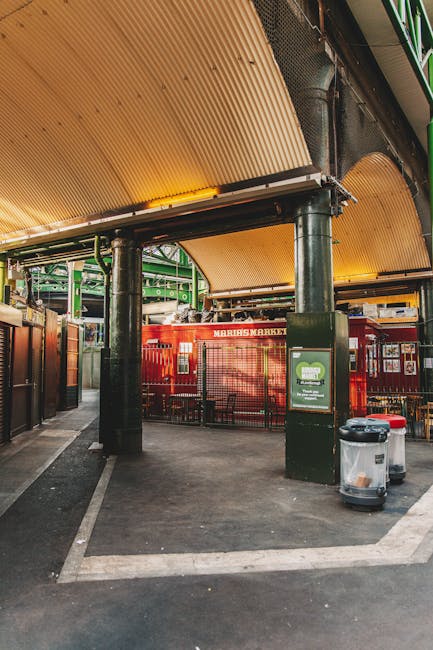
Borough Market rubbish removal services SE1: a practical guide for busy traders, households and property managers
Borough Market has its own rhythm: early starts, packed walkways, deliveries squeezing through narrow gaps, and a constant stream of packaging, food waste, old fixtures, and general clutter that seems to appear by magic. If you are searching for Borough Market rubbish removal services SE1, you probably need something fast, reliable, and discreet - not a vague promise and a half-finished van job.
This guide explains how rubbish removal works around Borough Market, why it matters in such a high-footfall part of Southwark, and what to look for if you want the job handled properly. Whether you run a stall, manage a cafe or office nearby, oversee a flat or conversion, or simply need bulky waste cleared without drama, you will find a clear, useful route through the options.
Truth be told, rubbish piles up quickly in a place like SE1. One busy service window, one refurb, one end-of-day clear-out - and suddenly the back area is full, the pavement looks untidy, and everyone feels a bit cramped. The good news? With the right approach, it does not have to become a headache.
Why Borough Market rubbish removal services SE1 matters
Borough Market is not the sort of place where waste can sit around unnoticed. Space is tight, the streets are busy, and mess stands out fast. A few bags left in the wrong place can affect foot traffic, create odours, attract pests, and make a good business look far less polished than it really is. In a market environment, presentation matters as much as cleanliness.
For traders and nearby businesses, rubbish removal is also a workflow issue. If bins overflow or bulky waste blocks access, staff spend time working around it instead of getting on with the day. For residents and landlords in SE1, the same thing happens during clear-outs, refurbishments, or move-outs. A room full of old furniture or renovation debris can stall everything else.
There is a practical local angle too. In mixed-use areas around Borough Market, waste must often be moved quickly and with care, especially where deliveries, pedestrians, and neighbouring properties all share the same narrow stretch of ground. That is where a planned removal service becomes more than just convenience - it becomes part of running the place properly.
If you are sorting out a larger clearance alongside day-to-day commercial waste, it may help to look at a broader waste removal service in Southwark as well as specialist support for the specific items you need gone.
Expert summary: In SE1, the best rubbish removal is usually the kind you barely notice happening - quick arrival, careful loading, tidy finish, and waste handled in a way that keeps the site moving.
How Borough Market rubbish removal services SE1 works
Most rubbish removal jobs around Borough Market follow a simple pattern, but the details matter. The aim is to collect waste from your site, load it safely, and remove it without disrupting trade, access, or neighbours more than necessary.
1. You describe the waste
You start by listing what needs removing. That might be mixed waste, broken shelving, packaging, office clutter, old kitchen equipment, furniture, or renovation debris. The more accurate your description, the better the planning. A neat pile of cardboard is one thing; a van full of mixed heavy items is another entirely.
2. The collection is planned around access
Access is often the deciding factor in Borough Market and nearby streets. A removal team needs to know about loading points, narrow entrances, stairs, basement storage, lift access, and any timing restrictions. If the job involves a trading space, timing is often arranged early, late, or in a window that causes the least friction.
3. The team loads and sorts waste
Good operators do more than just throw things into a vehicle. They separate reusable, recyclable, and non-recyclable material where possible, and they handle awkward items carefully so the site is left in better shape than it was found. That part sounds obvious. Still, you would be surprised how often it is skipped elsewhere.
4. Waste is taken to the right outlet
Rubbish should be transferred to the proper disposal or recycling route, depending on the type of material. If the waste includes bulky furniture, appliances, confidential papers, or potentially hazardous items, it should be dealt with through the appropriate process rather than tipped into a general load.
If you need a more specialised route, the website's dedicated pages can be useful. For example, office clear-outs are often easiest to arrange through office clearance, while house or flat contents are usually better suited to house clearance or flat clearance.
A lot of people think the hard part is lifting the waste. Often, it is actually the planning. Who knew the most difficult part of rubbish removal could be a staircase and a tight turning circle?
Key benefits and practical advantages
When rubbish removal is done properly, the benefits are immediate and easy to feel on site. The area looks clearer, the workflow improves, and you do not spend the day stepping around piles of unwanted stuff.
- Faster turnaround: waste leaves the site in one coordinated visit instead of lingering in bits and pieces.
- Better appearance: a clean frontage or back-of-house area gives a better impression to customers, suppliers, and residents.
- Less disruption: planned collections reduce awkward carry routes, blocked corridors, and clutter around entrances.
- Improved safety: removing loose items, splinters, broken fittings, and stacked bags reduces trip and strain risks.
- Better waste handling: recyclable and specialist items can be separated more sensibly when the job is organised well.
There is also a mental benefit that does not get mentioned enough. A clear space makes everything feel more manageable. That applies to a market stall, a small office, a rental property, or a basement storage room that has quietly become a museum of old deliveries.
For bulky household items, it can be helpful to compare options. Some people want a simple one-off visit for sofa or mattress removal, while others need a broader clearance. In those cases, pages like mattress and sofa disposal and furniture disposal can help narrow down the right route.
Who this is for and when it makes sense
Borough Market rubbish removal services SE1 are useful for more people than you might expect. This is not only for traders with a regular waste stream. It also makes sense for anyone dealing with awkward, time-sensitive, or bulky items in a busy part of London.
Traders and market operators
If you run a stall, cafe, or food business around Borough Market, rubbish removal helps with packaging, damaged stock, broken displays, old fittings, and end-of-day clutter. In a busy trading environment, clearing waste quickly can make the difference between a calm reset and a messy morning rush.
Local offices and commercial spaces
Offices nearby often need clear-outs after a move, a reorganisation, or the arrival of new furniture. Papers, desktop units, chairs, shelving, and old storage furniture can mount up quietly. For that kind of work, a dedicated business waste removal option is often more practical than trying to deal with it piecemeal.
Residents, landlords, and letting agents
Move-outs and end-of-tenancy clearances often involve mixed waste and furniture. Sometimes it is just a single bulky item. Sometimes it is a whole flat that needs stripping back before cleaners or decorators come in. In those moments, speed matters because the next contractor is probably waiting. Always waiting, it seems.
Builders, decorators, and fit-out teams
Refurbishment creates a lot of waste - plasterboard offcuts, timber, packaging, old fixtures, damaged materials, and general site clutter. If you want the site to stay safe and workable, it helps to organise a removal plan alongside the build. The builders waste clearance page is the most relevant starting point for that kind of job.
It makes sense when:
- you need waste removed quickly, not "sometime this week"
- the rubbish is too bulky or mixed for simple bin disposal
- access is limited and needs careful planning
- you want a tidy finish without multiple trips
- the waste includes items requiring special handling
Step-by-step guidance
If you want the process to go smoothly, think in terms of preparation rather than just booking a van. A little organisation beforehand can save a surprising amount of stress later.
- Separate the waste categories. Put furniture, packaging, general rubbish, electrical items, and hazardous materials into rough groups. It does not need to be perfect, just sensible.
- Measure access points. Check doors, stairwells, gates, lifts, and any tight corners. If a large fridge or desk needs to come out, the difference between "fits" and "doesn't fit" can be a few centimetres.
- Identify timing constraints. For Borough Market and nearby streets, collection times may need to work around trading hours, deliveries, or building access rules.
- Flag anything unusual. Old appliances, confidential paperwork, sharp scrap, or damp materials should be mentioned early. It avoids awkward surprises on the day.
- Ask about handling and disposal. Make sure the provider can deal with the exact waste type properly. If it is a fridge, for example, you want a route that is suitable for appliance removal.
- Keep the route clear. Move obstacles, unlock gates, and make sure the collection path is usable. This sounds basic, but it saves time and friction.
- Confirm the final plan. Before the team arrives, check who will meet them, where they should park or load, and what should definitely stay behind.
If your waste includes appliances, look at fridge and appliance removal. If it includes old desk units, filing cabinets, or confidential paperwork, the most suitable support may be confidential shredding.
A good rule of thumb? The clearer your brief, the smoother the clearance. Not glamorous, but true.
Expert tips for better results
In practice, the easiest rubbish removal jobs are the ones where the client thinks a step ahead. That does not mean overcomplicating everything. It just means giving the removal team the detail they need to work cleanly.
Book around your busiest periods
For market traders and nearby businesses, choose a time that avoids peak footfall where possible. Early morning can be ideal for some sites, while later in the day suits others. The best choice depends on your access pattern, noise tolerance, and how quickly the area refills.
Be realistic about volume
People often underestimate how much space broken furniture, packaging, and mixed waste actually takes up. A small pile can expand fast once it is lifted, sorted, and loaded. If you are unsure, be conservative and describe the job accurately rather than assuming it is smaller than it looks.
Use the right service type
One-off rubbish removal is not always the same as a full clearance. A shop reset, a loft clear-out, and a small office refresh each have different needs. Matching the job to the right service page - such as loft clearance or home clearance - can keep things efficient.
Ask about recycling and segregation
Waste with a high cardboard, metal, wood, or reusable furniture content may be suitable for better sorting. It is worth asking how the provider approaches recycling, especially if your business wants to improve its sustainability habits without making the process complicated.
Keep communication simple
A quick message with photos and a short list of items usually beats a long, vague description. If the team knows what is there, where it is, and how to reach it, the job becomes much more straightforward.
And yes, one more tip: do not leave the "mystery corner" until collection day. There is always a mystery corner.
Common mistakes to avoid
Most problems with rubbish removal are avoidable. They come from poor planning, not from the service itself. A few small mistakes can turn a straightforward job into a frustrating one.
- Not describing the waste properly. Mixed rubbish, appliances, building waste, and furniture are not interchangeable.
- Forgetting access issues. A van cannot help if the only loading route is blocked, locked, or too narrow for the items involved.
- Mixing hazardous items into general waste. Anything risky should be flagged early and handled separately.
- Leaving the booking too late. In a busy SE1 setting, waiting until the site is overflowing usually adds pressure.
- Assuming all items are treated the same. Some materials need special handling, and some should never be combined with ordinary rubbish.
Another common issue is underestimating how messy the final stretch can be. Once the heavy items are gone, you still may have dust, packaging tape, fixings, and small offcuts left behind. It is worth building a final sweep into the process so the area does not look half-finished.
Tools, resources and recommendations
You do not need specialist equipment for every clearance, but a few practical tools can make the whole thing smoother. This is especially true in a tight area like Borough Market where every minute and every step counts.
- Simple labels or tape: mark what is staying, what is going, and what must be handled carefully.
- Basic measurements: check large items against door widths, stair corners, and lift sizes.
- Phone photos: give a fast visual summary of the waste and access route.
- Gloves and sturdy footwear: useful if you are sorting light material before the team arrives.
- Checklist notes: a short written list reduces forgotten items and last-minute confusion.
On the website, the most useful supporting pages depend on the job. If you are looking at pricing and budgeting, pricing and quotes is the best place to check. If sustainability matters to your business or household, recycling and sustainability gives a better sense of how waste can be handled responsibly.
For larger property clearances, the following can also be helpful depending on the situation: furniture clearance, garage clearance, and garden clearance.
Law, compliance, standards, or best practice
Waste removal in London is not just about getting things out of sight. It also needs to be handled sensibly and in line with accepted UK practice. You do not need to become an expert in waste law, but you should know the basics.
At a practical level, that means waste should be collected, transported, and dealt with by people who understand the material type and the site conditions. Businesses should also think carefully about duty of care, safe handling, and whether any item requires special treatment. In plain English: if it looks hazardous, electrical, sharp, contaminated, or confidential, mention it early.
Best practice usually includes:
- separating hazardous and non-hazardous waste where appropriate
- keeping access routes safe for staff and visitors
- avoiding overfilling entrances, pavements, or shared spaces
- using a provider that can explain how waste is handled
- keeping documentation or records where your business process needs them
For peace of mind, it is also sensible to review a provider's approach to health and safety policy, insurance and safety, and payment and security. These may sound like background pages, but they tell you a lot about how seriously the business takes the job.
For items that need extra care, use the dedicated service pages rather than treating everything as general junk. Hazardous or awkward waste, for example, belongs under the correct route - not just a last-minute guess. That caution matters more than people sometimes think.
Options, methods, or comparison table
If you are deciding how to handle rubbish around Borough Market, there are usually a few ways to approach it. The right choice depends on access, volume, item type, urgency, and how tidy you want the site left afterwards.
| Method | Best for | Pros | Watch-outs |
|---|---|---|---|
| One-off rubbish removal | Mixed waste, bulky items, fast clear-outs | Flexible, quick, minimal effort from you | Needs clear brief and accurate access details |
| Specialist item removal | Appliances, sofas, mattresses, confidential waste | Better handling for specific items | May need separate preparation or sorting |
| Full property clearance | Flats, houses, offices, lofts, garages | Covers larger jobs in one coordinated visit | Needs more planning and item identification |
| Skip-based approach | Longer works with repeated waste generation | Good for ongoing projects | Space, permits, and item restrictions may apply |
If you are unsure whether a skip-style route even suits your waste type, the page on what can go in a skip is worth checking before you commit. Not every job is a skip job, and that is fine.
Case study or real-world example
Here is a realistic example from the kind of work that happens around Borough Market. A small food business near SE1 had accumulated a mixture of worn shelving, damaged stock boxes, packaging waste, and a couple of bulky back-room items after a refresh. Nothing dramatic, just one of those jobs that grows slowly until the space starts to feel tight and awkward.
The team wanted the area cleared before the next delivery cycle. The main challenge was access: a narrow route to the rear, limited time during service, and a shared space that needed to stay tidy for neighbouring tenants. So the plan was kept simple. Items were grouped in advance, the route was checked, and the removal was scheduled for a quiet window.
On the day, the work moved in stages. The bulky items came out first, then the mixed waste, then a final sweep for smaller bits. The result was not just "emptier" - it was usable again. Staff could move freely, deliveries were easier, and the back area stopped being a visual distraction.
That is the real value of good rubbish removal in SE1. It does not just make waste disappear. It gives you space back. And in a place where space is precious, that matters a lot.
Practical checklist
Use this before booking or on the morning of collection. It keeps things calm, and calm is underrated.
- Identify exactly what needs removing.
- Separate ordinary waste from special items.
- Check access routes, stairs, lifts, and loading points.
- Note any timing restrictions around trade or deliveries.
- Take photos of the waste and the area if helpful.
- Move anything that must not be taken.
- Flag fridges, appliances, sofas, mattresses, or confidential material separately.
- Ask how recycling, safety, and disposal are handled.
- Confirm who will meet the collection team.
- Do one last walk-through before the job starts.
If you are dealing with a more specific clearance, you can narrow things down further with service pages such as furniture clearance or office clearance. That often saves time and makes the booking process cleaner.
Get a free quote today and see how much you can save.
Conclusion
Borough Market rubbish removal services SE1 are about more than clearing clutter. They help keep a busy, high-pressure part of London moving safely and professionally. When waste is handled well, the whole environment feels easier to run - for traders, residents, property teams, and contractors alike.
The best results come from clear communication, sensible timing, and choosing the right type of removal for the waste in front of you. That sounds straightforward, and most of the time it is. The trick is giving the job enough attention before it becomes a problem.
Whether you are dealing with a single bulky item or a full clear-out, there is real value in getting it done properly the first time. Less fuss. Less mess. More room to get on with the day.
And honestly, once the space is clear and the noise of the pile has gone, you do feel it. A bit lighter, a bit calmer. That counts for something.
Frequently asked questions
What counts as Borough Market rubbish removal services SE1?
It usually means the collection and disposal of unwanted items from homes, shops, stalls, offices, or workspaces around Borough Market and nearby SE1 streets. That can include mixed rubbish, bulky items, furniture, packaging, and certain specialist waste types.
Can rubbish be removed from a busy trading space without disrupting customers?
Yes, if it is planned properly. The main thing is timing. Early morning, late evening, or a quieter access window often works best. Good communication matters as much as the lifting itself.
Do I need to sort the waste before collection?
A basic sort helps, but you do not need to overdo it. Separate clearly different items where possible, especially appliances, furniture, confidential material, and anything potentially hazardous. That makes the job smoother and safer.
Is this the same as general waste collection?
Not quite. General waste collection is often regular and bin-based, while rubbish removal is usually a one-off or occasional service for larger, awkward, or mixed loads. Many people use both, depending on the site.
What if I have furniture or office items to remove?
That is very common. Furniture can usually be handled through dedicated clearance routes, and office items may be better grouped under business-focused waste removal. It helps to mention desks, chairs, cabinets, and similar items early.
Can appliances and fridges be taken away too?
Often yes, but they should be handled through an appropriate appliance route. Fridges and similar items need a bit more care than general junk, so it is best to flag them specifically when booking.
What should I do with confidential papers?
Do not mix them into general rubbish. Confidential documents should be dealt with separately, ideally through a shredding or secure disposal process. That is one area where a quick shortcut can create avoidable risk.
How do I know if a skip is better than rubbish removal?
If waste is being generated over time from a project, a skip may suit you. If you want everything gone in one visit, especially from a tight site, rubbish removal is often easier. The type of material matters too.
Is there a best time to book in SE1?
Usually the best time is the one that fits your access and avoids peak disruption. Around Borough Market, that often means working around trading hours, deliveries, and pedestrian movement. There is no one-size-fits-all answer.
How can I keep costs under control?
Be accurate about what needs removing, group items sensibly, and make access as easy as possible. Clear instructions reduce delays and surprises. If you need to budget first, checking pricing and quotes is a sensible place to start.
What happens to the rubbish after collection?
That depends on the material type. Usable and recyclable items may be separated, while other waste is taken through the appropriate disposal route. If sustainability is important to you, ask how the provider approaches recycling and sorting.
Can I book rubbish removal for a flat or house near Borough Market?
Yes. Flats, houses, lofts, garages, and small rental properties are all common clearance jobs in SE1. Depending on the contents, pages like flat clearance and house clearance may be more relevant than a general waste page.
How do I get started?
Start by listing the items, checking access, and choosing the most suitable service type. If you are ready to move ahead, the easiest next step is to book online or review the company's about us information first if you want a better feel for who will be handling the job.