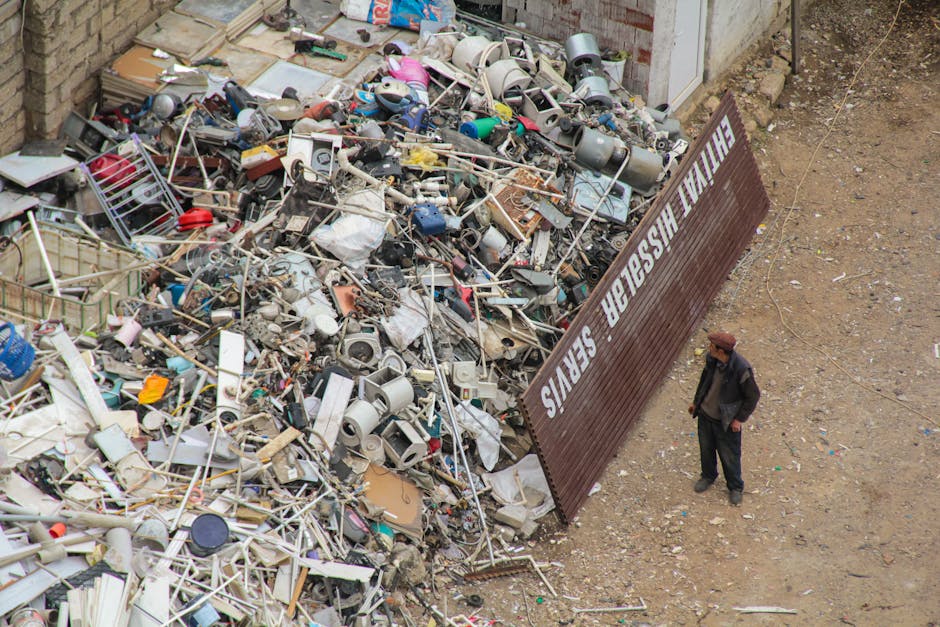
What to know about waste removal delays in Southwark

If you are dealing with a pile of bagged rubbish, a half-cleared flat, or a business back room that is starting to look like a staging area for chaos, waste removal delays in Southwark can feel much bigger than they should. One missed collection or postponed clearance has a way of throwing off the rest of the week. Let's face it, waste has a habit of becoming urgent the moment it is in your line of sight.
Understanding what causes these delays, how reputable services handle them, and what you can do to avoid them will save you time, stress, and probably a few awkward phone calls. In this guide, we'll walk through the practical side of waste removal delays in Southwark: why they happen, what to expect, how to prepare, and how to choose a service that keeps things moving when the schedule gets messy.
- Why waste removal delays in Southwark matter
- How waste removal delays in Southwark work
- Key benefits and practical advantages
- Who this is for and when it makes sense
- Step-by-step guidance
- Expert tips for better results
- Common mistakes to avoid
- Tools, resources and recommendations
- Law, compliance, standards, or best practice
- Options, methods, or comparison table
- Case study or real-world example
- Practical checklist
- Conclusion
- Frequently asked questions
Why waste removal delays in Southwark matter
Waste removal delays matter because they affect more than cleanliness. They can affect access, safety, customer experience, compliance, and even the timing of other jobs. In Southwark, where streets can be busy, parking can be tight, and many properties are in flats, conversions, or mixed-use buildings, a delay can ripple through the whole day.
For a household, a delay may mean living around a sofa, mattress, or builders' waste for longer than planned. For a business, it may mean staff working around clutter or stock that should already be gone. For landlords, agents, and contractors, one delay can hold up cleaning, letting, decorating, or a handover. Not dramatic on paper. Very dramatic in practice.
There is also a reputational side to it. If guests, customers, or tenants arrive and the waste is still there, the impression is immediate. Nobody walks in and thinks, "Ah yes, excellent logistics." They notice the mess. That is the reality.
In our experience, the biggest issue is not always the delay itself. It is the lack of clarity around it. Was the booking incomplete? Was access restricted? Was the waste not described properly? Was there a permit issue, a vehicle access problem, or simply a schedule clash? Knowing the likely cause gives you something solid to act on instead of just waiting and hoping.
Key takeaway: A waste removal delay is not just an inconvenience. In Southwark, it can disrupt access, timing, safety, and the finish of several other jobs at once.
How waste removal delays in Southwark work
To understand delays properly, it helps to understand how waste removal usually works. A typical job starts with the type of waste being identified, followed by a quote or booking, then collection logistics, and finally loading, transport, and disposal or recycling. A delay can happen at any of those stages.
For example, if a crew arrives and the waste turns out to be heavier, bulkier, or more complex than described, the job may take longer or require a revised arrangement. If access is poor, such as a fourth-floor flat with narrow stairs and no lift, collection can slow down quickly. If parking is difficult or the vehicle cannot stop nearby, even a simple clearance may take more time than expected.
Southwark adds its own practical wrinkles. Busy roads, controlled parking zones, shared entrances, restricted loading areas, and building management rules can all affect timing. On a damp afternoon, when everyone seems to be moving a bit slower and the road is full of delivery vans, even a straightforward pickup can drag. Human, not catastrophic - but still annoying.
Professional services usually manage delays by building in a bit of operational flexibility. That may include time windows, route planning, vehicle loading checks, and asking the right questions before arrival. Good communication matters here. A provider that asks about access, parking, item size, and waste type before confirming a job is usually being careful for a reason.
One useful distinction: a delay is not the same as a cancellation. A delay usually means the job is still planned, just later than expected. That said, if the original details were incomplete, the service may need to reschedule rather than force a rushed and inefficient collection.
Key benefits and practical advantages
At first glance, talking about delays might sound like talking about the opposite of a benefit. But the point is this: when you understand delays, you can reduce them, manage them, and choose better service options. That has real advantages.
- Less disruption: You can plan around the collection instead of working blind.
- Better budgeting: Clearer expectations reduce the chance of expensive rebooking or wasted time.
- Smoother access: Knowing what slows a job down helps you prepare the site properly.
- Fewer complaints: Teams, tenants, or customers are less likely to be frustrated if the process is explained well.
- Safer handling: Careful planning reduces rushing, lifting errors, and blocked exits.
There is also an environmental benefit. Delays often happen when waste is not sorted, labelled, or described properly. A more organised approach means recyclable materials, bulky items, and specialist waste can be handled more appropriately. That matters if sustainability is part of your decision-making, and in London that usually is.
For businesses especially, reliable waste removal is one of those quiet essentials. Nobody praises it when it works, but everybody notices when it fails. A tidy yard, a clear stairwell, a useable loading bay - these things make the rest of the day easier. Simple, really.
Who this is for and when it makes sense
This topic is relevant to more people than you might think. Waste removal delays in Southwark affect households, landlords, offices, shops, hospitality venues, contractors, and anyone clearing a property under time pressure.
You will find this especially useful if you are:
- moving out of a flat and need a fast turnaround
- handling a house clearance after a tenancy or family change
- clearing office furniture or archive waste before a relocation
- managing builders' waste after refurbishments or repairs
- dealing with bulky items such as wardrobes, sofas, mattresses, or appliances
- trying to avoid fines, complaints, or missed deadlines due to rubbish build-up
It also makes sense if you are comparing different clearance methods. For instance, a skip may suit some projects, while a man-and-van style removal is better for awkward access or mixed waste. If you are not sure which route fits your job, it helps to think about speed, access, and the type of waste first. The cheapest-looking option is not always the least painful one. A bit of a truth bomb, but there it is.
People often underestimate the effect of access. A basement, a top-floor walk-up, or a narrow road near a busy junction can turn a simple collection into a small logistical puzzle. If that sounds familiar, you are exactly the kind of reader this guide is for.
Step-by-step guidance
If you want to reduce the chance of a delay, the best approach is to treat the job like a small project rather than a quick favour. Here is a sensible process.
- List the waste clearly. Separate bulky items, general rubbish, recycling, and anything that may need specialist handling.
- Check access in advance. Think about stairs, lifts, parking, loading space, and entry codes or concierge rules.
- Take a few photos. Visuals help a provider understand volume and complexity, especially for mixed waste.
- Ask about timing windows. A firm arrival time is not always realistic in a busy area, so check how the service handles scheduling.
- Confirm what is accepted. Some materials need separate handling, such as fridges, hazardous items, or confidential waste.
- Prepare the site. Move items together where possible, clear a path, and keep doors or gates accessible.
- Stay reachable. If the crew needs a quick decision on-site, a delay can snowball if nobody can approve a change.
That last one matters more than people expect. A driver rings, cannot get into the courtyard, waits, rings again, and suddenly a ten-minute issue becomes a half-hour delay. Not glamorous, but common.
If your waste is part of a broader clearance, break the job into sections. For example, a flat clearance might involve furniture, small appliances, bags of mixed household items, and a few odd bits from a loft or storage cupboard. If the service knows that in advance, they can plan crew size and loading order more effectively.
And if you are working to a deadline, tell the provider that clearly. "We need this gone before the decorators arrive at 2 pm" is much more helpful than "sometime today." Specifics help people help you.
Expert tips for better results
Here are the practical things that tend to make the biggest difference. These are not flashy tips. They are the small, boring, useful ones that save time.
- Book earlier than you think you need to. Last-minute jobs are possible, but they are more vulnerable to knock-on delays.
- Be honest about the volume. Understating waste is one of the fastest ways to slow a job down.
- Separate anything tricky. Keep hazardous items, sharps, liquids, and electronics apart from general rubbish.
- Make the route obvious. If the team has to ask where to park, where to ring, and which door to use, the clock starts bleeding away.
- Use photos, not guesswork. A few good pictures can prevent a surprisingly expensive misunderstanding.
One small but useful habit is to add a "done and ready" message when your waste is staged. It sounds almost too simple, but it can prevent confusion if there is a timing window involved. The crew knows what they are arriving to, and you know they have the latest information.
Another tip: if you are clearing a shared building, warn neighbours or building management beforehand if needed. A lorry, a bin route, or a bulky-item move can create a bit of friction in communal spaces. Better a quick heads-up than a grumble in the hallway later.
Sometimes the best fix is not faster collection but better preparation. That is the quiet little secret here.
Common mistakes to avoid
Most waste removal delays come from predictable mistakes. The good news is that predictable mistakes are usually preventable.
- Giving vague descriptions: "A few bits" is not enough when a crew needs to plan space and labour.
- Forgetting about access: Parking restrictions, security gates, lift restrictions, and narrow staircases all matter.
- Mixing waste types without warning: General rubbish, electrical items, and specialist waste may need different handling.
- Leaving everything until the last minute: Rushed bookings lead to rushed logistics, and that is where delays start to creep in.
- Not checking what is excluded: Some items need a different process, and finding that out on arrival causes obvious problems.
- Assuming the first available slot is the best slot: The cheapest time slot can be the one with the least flexibility.
There is also a human mistake that comes up often: assuming everyone involved has the same understanding of the job. They rarely do. The resident imagines one room. The contractor imagines three bulky items and a bag. The booking team imagines a van-sized load. Then the day arrives and, well, everyone blinks at each other.
Clear information avoids that awkwardness. Which is, honestly, half the battle.
Tools, resources and recommendations
You do not need fancy software to manage a waste removal booking, but a few basic tools help a lot. A phone camera, a notes app, and a simple checklist can make the process much smoother.
Useful things to have ready:
- photos of the waste from different angles
- the postcode, flat number, and access instructions
- a rough list of item types and quantities
- building rules if there is a concierge, loading bay, or restricted entrance
- details of anything unusual, such as heavy office furniture or broken appliances
If you want to understand service scope better, it can help to review pages such as waste removal services, business waste removal, or home clearance depending on the type of job you are planning. For awkward bulky items, the pages on furniture clearance and mattress and sofa disposal are especially relevant. If you are dealing with building debris, builders waste clearance is the more appropriate route.
For readers comparing pricing or wanting to avoid surprises, the pages on pricing and quotes and what can go in a skip are useful starting points. And if the delay is tied to sustainability concerns or sorting, recycling and sustainability gives a clearer picture of how responsible disposal is usually approached.
If you need a quick booking route, book online can be the simplest next step. Small plug, but a practical one.
Law, compliance, standards, or best practice
Waste removal in the UK is not something to treat casually. You do not need to know every legal detail, but you should understand the basics of duty of care, safe handling, and appropriate disposal routes. In plain English, that means waste should be described accurately, handled safely, and taken to an appropriate facility or process.
For householders, the main concern is using a service that treats waste properly and does not cut corners. For businesses, there is a bigger compliance burden because commercial waste often involves record-keeping, segregation, and responsibility for what happens after collection. If you are a business owner or facilities manager, sloppy booking details can become a real headache, because the issue is not only delay - it can also become an audit or traceability problem later on.
Health and safety also matter. Heavy lifting, broken furniture, dirty lofts, and mixed debris all increase risk if people rush. That is why reputable providers often work with safety procedures, and why you should look for clear operational standards. If a team seems casual about access, lifting, or item type, that is usually not a good sign.
It can help to review a provider's own policies before booking, especially if your job involves sensitive items, difficult access, or a commercial site. Pages like health and safety policy, insurance and safety, and confidential shredding are useful signals of how a company thinks about risk and responsibility.
If hazardous or unusual materials are involved, extra caution is sensible. Anything labelled as hazardous waste should be handled separately and only through the correct process. Better a slight delay than a messy problem later. That part is non-negotiable.
Options, methods, or comparison table
If you are deciding how to deal with waste removal delays, the best method often depends on access, speed, and waste type. Here is a simple comparison of the most common approaches.
| Method | Best for | Possible delay risk | Practical note |
|---|---|---|---|
| Booked waste removal | Most homes, offices, and mixed clearance jobs | Access issues, inaccurate descriptions, traffic | Usually the most flexible if the job is described properly |
| Skip hire | Projects with predictable volumes and a suitable drop-off space | Permit, placement, and loading delays | Good for ongoing work, less ideal for awkward access |
| Self-loading or DIY disposal | Small loads and people with transport | Multiple trips, time loss, disposal-site restrictions | Looks cheaper until your Saturday disappears |
| Phased clearance | Large properties, renovations, or sensitive clearances | Coordination delays between stages | Often the safest option where access or sorting is complex |
For many Southwark properties, a booked removal service is the most practical option because access can be tricky and time windows matter. If you have a simple load and a clear parking spot, another method may work fine. But if you are dealing with flats, basement rooms, or mixed materials, flexibility matters more than theory.
One thing people often miss is the value of a phased approach. If a clearance is large, breaking it into stages can reduce pressure on everyone. Less rushing, fewer surprises, and fewer "sorry, we didn't realise that was in the back room" moments. Those moments are never fun.
Case study or real-world example
Here is a realistic example based on the sort of situation that comes up all the time in Southwark.
A small office near a busy local high street needed old desks, chairs, packaging, and two broken printers removed before a workspace refresh. The team originally planned for a morning clearance, but there were two pressure points: limited parking and a lift that required booking in advance. On top of that, the printer units turned out to be heavier than expected. Classic.
Rather than forcing the job, the organiser did three useful things. First, they sent clear photos of the waste. Second, they confirmed access times with the building manager. Third, they shifted the collection window slightly later so the team would not arrive during the busiest road crossing period. The result was not dramatic, but it was smooth. No one had to stand in the hallway waiting, and the office refresh stayed on schedule.
The lesson here is simple: delays are often reduced by accurate setup, not by luck. The more awkward the property, the more important those small details become. A little preparation beats a big apology, every time.
Another common scenario is a flat clearance after moving out. If bags are left in separate rooms and the lift is small, the job can take much longer than expected. When the waste is staged in one accessible spot beforehand, the whole process tightens up. A boring tip, maybe. But it works.
Practical checklist
Use this quick checklist before your collection day. It is simple, but it catches the usual trouble spots.
- Have I listed everything that needs removing?
- Have I told the provider about stairs, lifts, parking, and access codes?
- Have I separated any hazardous or specialist waste?
- Have I shared photos if the load is bulky or mixed?
- Have I confirmed the time window and how updates will be sent?
- Have I checked whether any items need special handling?
- Is the collection point clear and easy to reach?
- Have I warned anyone else in the building if needed?
- Do I have a backup plan if the schedule shifts slightly?
If you can tick most of those boxes, you are already ahead of the curve. Really ahead, if we are honest.
Conclusion
What to know about waste removal delays in Southwark comes down to a few practical truths: clear information prevents confusion, access matters more than people think, and the best way to avoid disruption is to plan the job properly from the start. Delays are not always avoidable, but they are often manageable once you understand what causes them.
Whether you are clearing a flat, handling office waste, or dealing with bulky items after a renovation, the same principles apply. Be specific, prepare the site, check the access, and choose the right method for the load. That is usually enough to keep things moving.
If you are facing a deadline and want the process handled with less fuss, start with a provider that explains things clearly and asks the right questions. That alone can save you a lot of back-and-forth.
Get a free quote today and see how much you can save.
And if the day has already gone a bit sideways, don't worry. A tidy finish is still very possible.
Frequently Asked Questions
Why do waste removal delays happen in Southwark?
Delays usually happen because of access issues, traffic, parking restrictions, unclear waste descriptions, or items that need different handling. In Southwark, tight streets and shared entrances can add extra complexity.
How can I reduce the chance of a delayed collection?
Give accurate details, send photos, confirm parking and access, and stage the waste in one easy-to-reach place. A little preparation makes a big difference.
Is a delay the same as a cancellation?
No. A delay usually means the job is still planned, just later than expected. A cancellation means it will not happen at that time and usually needs a new booking.
What information should I give before booking?
Share the type of waste, the approximate volume, the location, access details, any parking restrictions, and whether there are any specialist items such as appliances or confidential materials.
Do bulky items make delays more likely?
Yes, they can. Large furniture, mattresses, and awkward items take more time to move, especially in flats or buildings with stairs and no lift.
What should businesses in Southwark watch out for?
Businesses should pay attention to timing windows, site access, waste segregation, and any record-keeping requirements. A delay can affect operations as well as cleanliness.
Can I still book waste removal if I am in a rush?
Often yes, but you should be realistic about timing. The more urgent the job, the more important it is to give accurate details and stay available for quick communication.
What if the provider arrives and the waste is different from what I described?
The job may take longer, need a revised price, or require a reschedule. That is why it pays to be very clear about the load before collection day.
Are hazardous items handled differently?
Yes. Hazardous waste should be separated and handled through the correct process. It is not something to leave mixed in with ordinary rubbish.
Should I choose a skip or a collection service?
It depends on access, volume, and how quickly you need everything gone. A collection service is often easier for flats, mixed waste, and tight spaces, while a skip can suit longer projects with good placement options.
What if the delay affects my moving day or refurbishment?
Tell the provider as soon as possible and explain the deadline. If the waste is part of a larger schedule, it may be possible to adjust the timing or split the job into stages.
How do I know if a waste removal service is well organised?
Look for clear questions during booking, straightforward pricing, safety awareness, and sensible guidance about access and waste types. A good service tends to sound calm, specific, and unhurried.